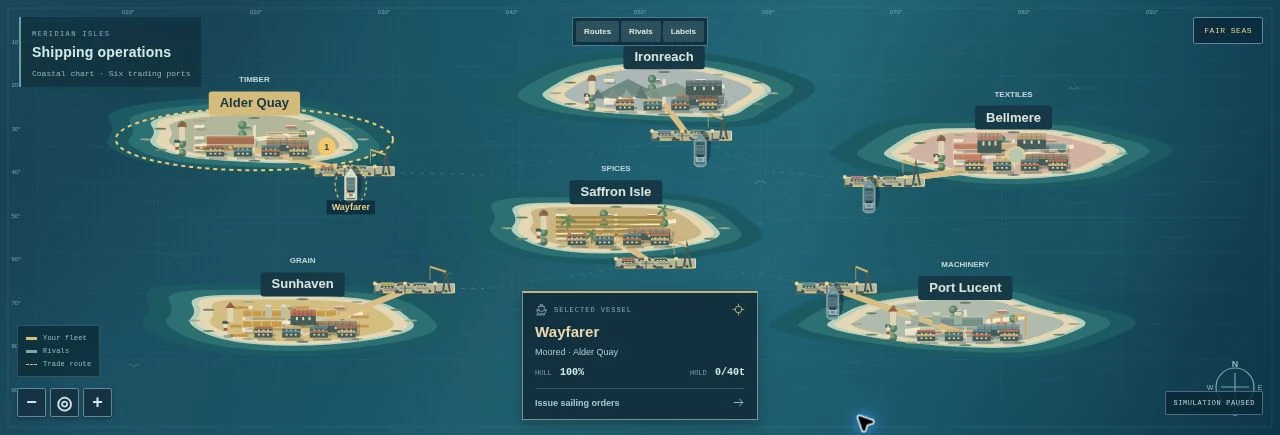
1. Complete the first timber voyage
In the campaign, your Alder Quay depot starts with 25 tonnes of timber. Load that timber onto your ship. Open Fleet, select Sunhaven as the destination and set sail. Advance time at 1× while the ship travels.
Once the vessel is moored, select Sunhaven in Trade and sell the cargo. Buying, moving and selling are separate actions. Timber still in a depot has not been loaded, and timber sitting in a hold has not been sold.
2. Look past the headline selling price
Markets have finite stock and prices change as goods are bought and sold. The margin for a large load can differ from the price shown for its first units. Rival shipping lines use the same markets, so a route needs checking over time.
Fuel is needed for departure, crews incur ongoing costs, and hull condition needs attention. Compare the income from a voyage with cargo purchases and operating costs. A bigger selling price at a more distant port is not automatically the better trip.
3. Give the return journey a job
After selling timber at Sunhaven, inspect available cargo and demand elsewhere. Grain bound for Ironreach is one possible next move, but check current stock and prices before committing. The market can change while you are sailing.
Keep a cash reserve for fuel, crew and repairs instead of filling every available tonne at any price. An empty hold may be less costly than a hold full of cargo you cannot sell profitably.
4. Treat delivery contracts as commitments
Read the required cargo, destination and deadline before accepting a contract. Allow time to acquire the goods and move the ship, not just time for the voyage after loading. Weather and hull wear can make a tightly planned schedule less forgiving.
Contract payment follows the delivery. Do not spend that expected revenue as though it is already in the account. Check the delivery action at the destination and confirm that the contract has actually been completed.
5. Automate a route you understand
Automatic routes can repeat buying, travelling and selling. First run a route manually so you know the ports, cargo and cash requirements. Then review its performance as markets change rather than assuming an early margin lasts forever.
More ships add capacity and costs. Expand when you have useful work for the next vessel. Depots, factories, research and hold upgrades offer other ways to improve the network. Use the company menu to export a save before moving to another browser or device.
Check the foundations.
- The first timber is loaded, delivered and sold.
- Your route leaves cash for departure and operating costs.
- You have checked current prices for a return cargo.
- A new ship or automatic route has a clear job.
Your next move is in the game.
Put the guide to work in Harbor & Co..